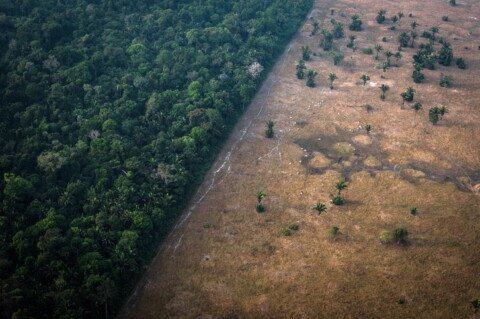


By the end of this month, world leaders, climate and environment activists, and enthusiasts will gather in Glasgow for the COP26 (Conference of Parties) to address climate change. In a year where countries are submitting their newly updated NDCs (Nationally Determined Contributions), that aim to showcase the countries’ plans to cut down their greenhouse gas emissions and present their mitigation and adaptation strategies, the world has witnessed one of the toughest years of extreme weather events.
Therefore, this year’s COP is projected to be challenging, especially, after the publication of the 6th assessment report of the IPCC, which deemed that humanity is facing a blaring red alert as communities around the world are grappling to survive floods, droughts, and endless strings of natural disasters that threaten local ecosystems and the livelihood of thousands of vulnerable people.
On this premise, we sat down with the UK Ambassador to Tunisia Mr. Edward Oakden to discuss this year’s COP and its importance to the UK and to the rest of the world, along with other related matters.
The Status Quo of Climate.
Mr. Oakden explained that after six years of the Paris Agreement where world leaders have agreed that it is in our best interest to reduce our greenhouse gas emissions in order to limit global warming in this century and to stay below 2°C and ideally under 1.5°C if we want to keep at bay a climate catastrophe, the world is already facing a code red situation as we are already on the threshold of 1.5°C, knowing that the slightest of a degree could introduce an enormous change to the weather. Thus, he emphasized that within the framework of this upcoming conference it is important to come to an agreement that countries should halve their emissions by 2030 and reach net zero by 2050.
He added “(…) This yet another international conference is so important for us, and it seems to us that literally, it is the last best opportunity that the world will have to really get a grip of the issue of climate warming.”
COP26 and UK’s Vision of Leadership.
COP26:
The UK and in partnership with Italy are leading this year’s Conference of Parties. As the world’s eyes are on Glasgow, Mr. Edward Oakden said that the UK’s presidency is more than organizing an international conference for more than 30,000 people in the middle of a global pandemic, but it also means that the UK is taking a step into global leadership. Mr. Oakden expressed his enthusiasm about youth participation in this COP. He said that he would be “impressed by the commitment of the young people from all over the world will bring to this event.” He explained that young people’s commitment is important as they would be the leaders making decisions in 2050. He added that what is still relatively unknown for everyone is the willingness of the parties to the conference to break out of the business as usual and to bring about a real change, because “(…) if everyone sticks to where we are now, that’s brutal! Because countries so far hadn’t made the extra steps, the extra efforts, and agreed to the extra cost that would be necessary to get to what the international scientific body has identified as the necessary target.”
The Vision:
He explained that the UK is working on helping countries translate the Paris agreement commitments into actions. This presidency, as he said, provides a perfect opportunity for the UK to help lead the international efforts to support countries to present practical commitments. The efforts are focusing on transforming the international commitments pledged in Paris in 2015 into national commitments that would help these countries identify their technical and financial needs to face climate change.
Mr. Oakden said that the UK has been working, within the framework of the COP26, with the members of the G7 which are the biggest emitters, but also the richest countries in the world like the United States, to advance the global efforts.

The New Tunisian’s NDC and Future Endeavors.
Mr. Edward Oakden thought that the enhanced Tunisian NDC is a very important contribution, despite the fact that its greenhouse gas emission reduction target does not reach 50% by 2030. However, the updated roadmap is setting the country on a good path to reach a net zero by 2050.
He said that the UK is planning to help Tunisia to reach that goal and has already supported the country via implementing different projects. Mr. Oakden highlighted the importance of Tunisia opening its market to renewable energy, which would not only benefit the environment but also boost the country’s economy. He explained that the fate of Tunisia’s economic competitiveness is linked to the green market.
He added: “I was in Sfax last week which is one of the nation’s prime producers of Couscous, [which] is something dear to Tunisians’ hearts. And, [the city] has just installed a steam turbine to make the Couscous, which [the machine] happens to be from Britain and it lowers the energy cost by 30% (…)”
He explained that this shift from gas to steam is not only environmentally beneficial, but it is also economically efficient as this method helps the producer cut the energy expenses which represents 15% of production costs. He emphasized that small steps and changes like this would lead to greater achievements.
On a final note, Mr. Edward Oakden said that we are all individually responsible for playing our parts in mitigating climate change, by making the decisions to use environmental-friendly methods and to adopt the best practices to mitigate our carbon footprint. For instance, we can individually plant more trees and shift our energy intakes to greener ones. He explained that by voting committed and climate-conscious individuals into office we will be helping create policies that would shape the future of the world and support global efforts in mitigating and adapting to climate change.
Interviewer: Saida Zemzemi
Author: Imen Al-Nighaoui
Picture: Mokdad Chaouachi